Fire Damage Cleanup Process for Atlanta Homeowners
A house fire leaves behind more than charred walls. Smoke infiltrates every surface, soot clings to belongings, and that unmistakable burnt odor seeps into places you can't see. For Atlanta homeowners facing this reality, understanding the fire damage restoration process helps take some of the uncertainty out of an overwhelming situation. Our team at The Homestar Group has helped families throughout metro Atlanta, from Decatur to Marietta, recover from fires for over 15 years. This guide walks you through exactly what happens during professional fire damage cleanup, so you know what to expect.
Understanding Fire Damage in Atlanta Homes
Fire damage goes far beyond what you can see. The visible destruction tells only part of the story. Heat warps structural materials. Smoke particles, some as small as 0.1 microns, penetrate deep into porous surfaces like drywall, wood framing, and insulation.
Atlanta's humid climate adds another layer of complexity. Moisture in the air can react with soot and smoke residue, accelerating corrosion on metal surfaces and causing faster deterioration of affected materials. This is why timing matters so much.
According to the Institute of Inspection, Cleaning and Restoration Certification (IICRC), the first 24 to 48 hours after a fire are critical. Soot begins to permanently stain surfaces within days. Smoke odors become harder to eliminate as particles settle deeper into materials. The longer cleanup is delayed, the more extensive the damage becomes.
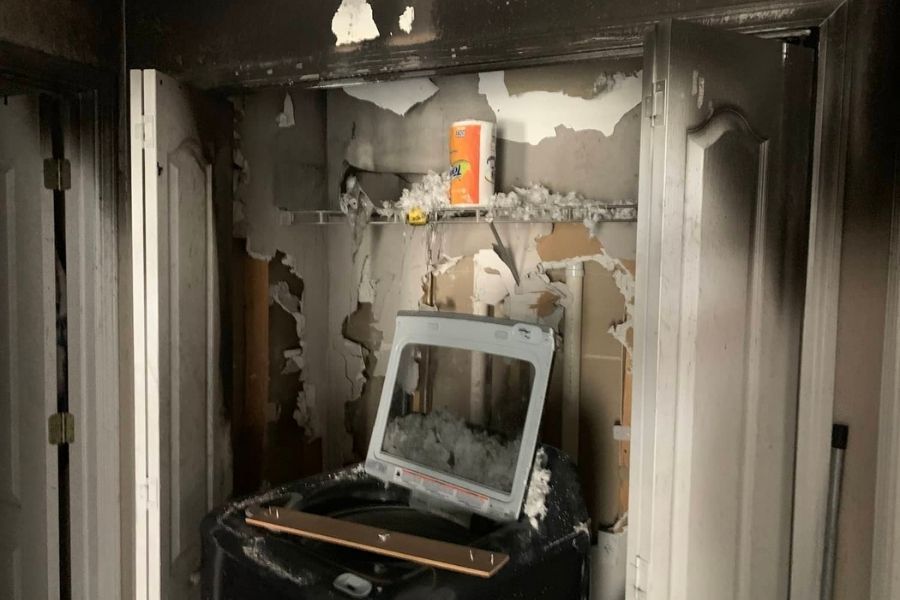
Smoke and fire damage affects both visible surfaces and hidden structural elements throughout the home.
The Fire Damage Cleanup Process Step by Step
Professional fire damage cleanup follows a systematic approach. Each phase builds on the previous one. Skipping steps or rushing the process leads to problems down the road, from lingering odors to hidden mold growth from water used to extinguish the flames.
Phase 1: Emergency Response and Assessment
The process starts with a thorough inspection. Restoration technicians document the full extent of damage, both obvious and hidden. They check structural integrity, identify safety hazards, and catalog affected areas and contents.
This assessment creates the roadmap for everything that follows. It also provides essential documentation for your insurance claim. Good technicians take detailed photos and notes during this phase.
Phase 2: Securing the Property
Before cleanup can begin, the property needs protection. Board up services cover broken windows and damaged openings. Tarps protect roof damage from weather. This prevents additional damage from rain, wind, or unauthorized entry.
In Atlanta, afternoon thunderstorms can roll in quickly. A fire damaged roof left unprotected becomes a water damage problem too. Securing the property immediately prevents compounding disasters.
Dealing With Fire Damage in Your Atlanta Home?
Our IICRC certified team responds 24/7 to fire emergencies throughout metro Atlanta. We work directly with your insurance company to simplify the claims process.
Get Emergency Help NowPhase 3: Water Removal and Drying
This surprises many homeowners. Fire damage cleanup often starts with water extraction. Firefighting efforts leave behind significant moisture that must be addressed before smoke and soot cleanup can begin effectively.
Professional teams use commercial extractors, dehumidifiers, and air movers to dry the structure. This phase typically takes 3 to 5 days depending on the water volume and affected materials.
Phase 4: Smoke and Soot Removal
Now comes the intensive cleaning work. Different types of fires leave different residues. A kitchen grease fire produces oily, sticky soot. An electrical fire leaves behind fine, dry particles. Furnace malfunctions create protein based residues. Each requires specific cleaning approaches.
Technicians use specialized equipment including HEPA vacuums, dry sponges, wet cleaning solutions, and abrasive techniques depending on the surface and residue type. Walls, ceilings, floors, and all structural surfaces get cleaned systematically.
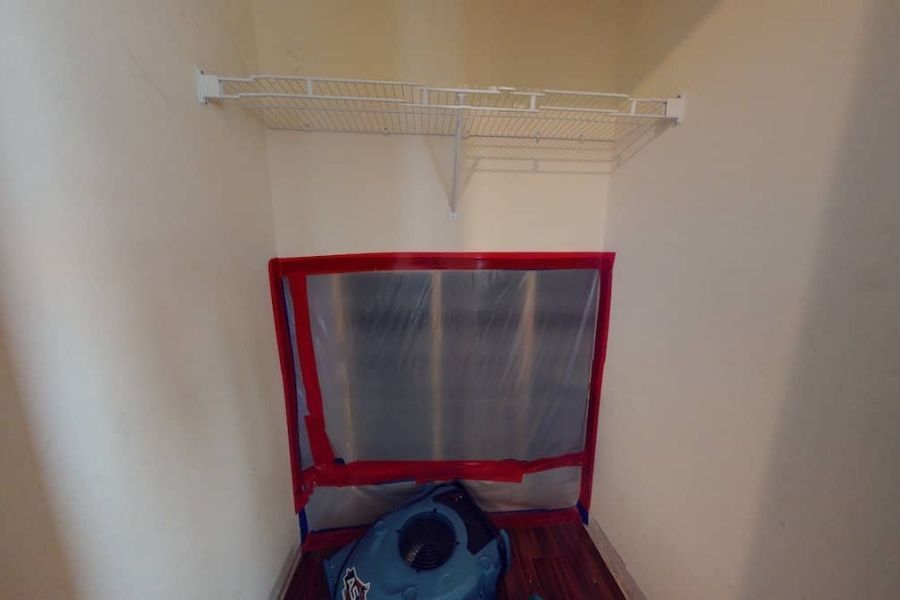
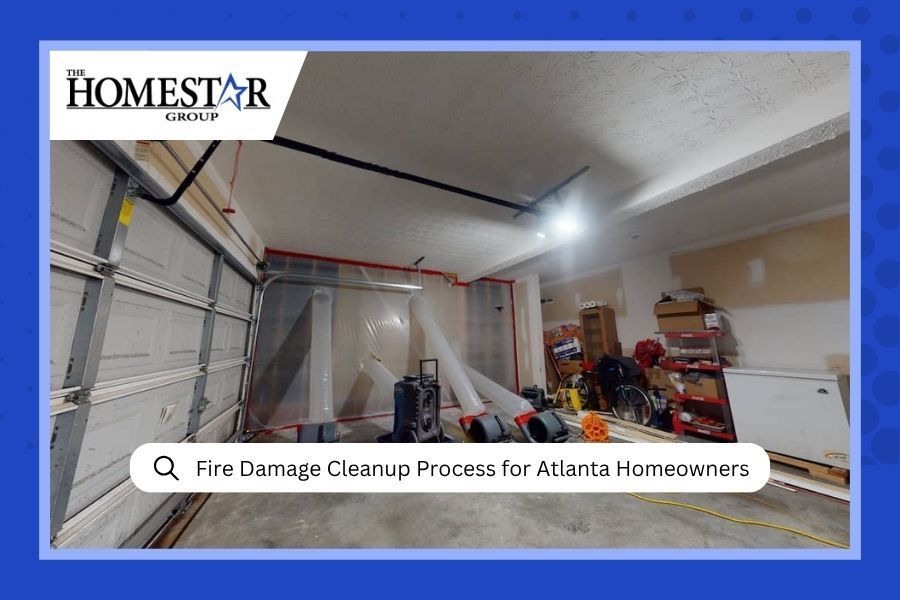
Air scrubbers and containment barriers help control smoke particles during the cleanup process.
Smoke and Soot Removal Techniques
Smoke doesn't just affect the rooms where the fire occurred. It travels through HVAC systems, seeps through walls, and settles in areas far from the fire's origin. Effective cleanup addresses the entire home, not just visibly damaged areas.
| Fire Type | Residue Characteristics | Cleaning Approach |
|---|---|---|
| Kitchen/Grease Fire | Oily, sticky, difficult to remove | Degreasing agents, wet cleaning |
| Electrical Fire | Fine, dry, easily smears | Dry sponges, HEPA vacuuming |
| Furnace Puff Back | Protein based, strong odor | Enzyme cleaners, thermal fogging |
| Structural Fire | Mixed residues, char debris | Multi step process, abrasive cleaning |
Air Quality Restoration
Cleaning surfaces is only half the battle. Smoke particles remain suspended in the air and embedded in soft materials. Professional teams use air scrubbers with HEPA filtration to capture airborne particles. Ozone generators and hydroxyl machines help neutralize odors at the molecular level.
This is one area where DIY approaches fall short. Consumer grade air purifiers simply can't match the volume and filtration capabilities of commercial restoration equipment. The EPA emphasizes that proper ventilation and air filtration are essential for restoring healthy indoor air quality after fire events.
Content Cleaning and Restoration
Your belongings need attention too. Clothing, furniture, electronics, documents, and personal items all absorb smoke. Professional content cleaning uses techniques like ultrasonic cleaning for hard goods, ozone chambers for soft goods, and specialized document recovery for important papers.
Not everything can be saved. An honest restoration company will tell you when items are beyond salvage rather than charging you for cleaning that won't work. Read about how our team approaches what to do after a house fire for more details on content decisions.
What to Expect During Professional Restoration
Fire damage restoration isn't a quick fix. Depending on damage severity, the full process takes anywhere from a few weeks to several months. Understanding the timeline helps manage expectations and plan accordingly.
Timeline Breakdown
- Days 1 to 3: Emergency response, assessment, property securing, water extraction begins
- Days 3 to 7: Water mitigation continues, smoke and soot cleaning begins
- Weeks 2 to 4: Deep cleaning, deodorization, content restoration
- Weeks 4 and beyond: Structural repairs, reconstruction, final restoration
Smaller fires with limited damage move faster. Major structural fires take longer. Your restoration team should provide a realistic timeline based on your specific situation, not a generic estimate.
Why Hire Professionals Instead of DIY?
Some homeowners consider handling cleanup themselves to save money. We understand the impulse. But fire damage involves hazards that require professional training and equipment.
Structural instability poses real danger. Weakened floors, damaged support beams, and compromised roofing can collapse without warning. Soot contains carcinogens and respiratory irritants. Improper cleaning can spread contamination rather than remove it. And incomplete odor removal means the smell returns, sometimes months later.
See how our team handled a complex fire recovery in this Atlanta fire restoration case study.
Working With Insurance After a Fire
Most homeowner's insurance policies cover fire damage. The claims process, however, can feel overwhelming when you're already dealing with displacement and stress. A reputable restoration company helps navigate this process.
At The Homestar Group, we work directly with insurance companies throughout the Atlanta metro area. Our documentation from the initial assessment supports your claim. We communicate with adjusters, provide detailed estimates, and advocate for fair coverage of necessary repairs.
Key steps for successful claims include documenting everything before cleanup begins, keeping all receipts for temporary living expenses, and understanding your policy's coverage limits. Don't throw anything away until the adjuster approves. Learn more about insurance claims for Atlanta fire damage homes.
Preventing Secondary Damage After a Fire
The fire itself causes primary damage. Secondary damage happens after the flames are out. Water from firefighting, exposure to elements through damaged roofing, and corrosion from acidic soot residue all contribute to ongoing deterioration.
Quick action prevents secondary damage from compounding your losses. This is why 24/7 emergency response matters. Our team at The Homestar Group responds to fire emergencies throughout Atlanta and surrounding communities including Stone Mountain, Conyers, and Decatur.
Fire damage also creates conditions for mold growth due to the water used in firefighting. Within 48 to 72 hours, mold can begin colonizing wet materials. Professional restoration addresses moisture immediately to prevent this secondary problem.
Frequently Asked Questions About Fire Damage Cleanup
How long does the smell of smoke last after a fire?
Without professional treatment, smoke odor can persist for months or even years. The smell comes from microscopic particles embedded in porous materials like drywall, carpet, fabric, and wood. Professional deodorization using thermal fogging, ozone treatment, and hydroxyl generators typically eliminates odors within 1 to 2 weeks, though heavily affected materials may need removal and replacement.
Can I stay in my house after a fire while cleanup happens?
In most cases, no. Fire damage creates safety hazards including structural instability, air quality concerns, and utility disruptions. Your insurance policy likely covers additional living expenses for temporary housing during restoration. This keeps your family safe and allows the restoration team to work efficiently without coordinating around occupants.
What items can be saved after fire and smoke damage?
Many items can be professionally cleaned and restored, including furniture, clothing, electronics, and documents. Hard non-porous items generally clean up well. Heavily charred or melted items, food products, medications, and cosmetics should be discarded. A professional content cleaning assessment determines what's salvageable and what's not worth the cleaning cost compared to replacement value.
Does fire damage restoration include rebuilding damaged structures?
Full service restoration companies handle both cleanup and reconstruction. At The Homestar Group, we take projects from initial emergency response through complete rebuild. This single source approach simplifies coordination, keeps timelines on track, and ensures the restoration team understands the full scope of what's needed for your home's recovery.
Getting Your Home Back After Fire Damage
Fire damage is one of the most stressful experiences a homeowner can face. The good news is that with the right professional help, most fire damaged homes can be fully restored. The key is acting quickly, working with experienced restoration specialists, and understanding the process from start to finish.
The Homestar Group has served Atlanta area families for over 15 years. Our IICRC certified technicians respond 24/7 to fire emergencies throughout metro Atlanta, Rockdale County, and the surrounding communities. We handle everything from initial assessment through complete reconstruction, working directly with your insurance company to streamline the process.
If your home has suffered fire damage, contact our team for a free assessment. We'll walk you through exactly what's needed to restore your home and your peace of mind.

Jeremy York is the owner of The Homestar Group, bringing over 15 years of experience in the water and fire damage restoration industry to homeowners and businesses throughout the Atlanta metro area. Under his leadership, The Homestar Group has built a reputation for reliable 24/7 emergency response and professional restoration services backed by IICRC certification. Jeremy is committed to serving the local community and takes pride in helping families and business owners recover from unexpected disasters. His hands-on approach ensures every customer receives the care and attention they deserve during challenging times.