
How to Document Water Damage for Insurance Claims in Georgia
Jump To:
Dealing with water damage restoration is stressful enough without worrying about whether your insurance company will cover the repairs. But here's the reality: the way you document damage in those first hours can make or break your claim. Georgia homeowners who take the right steps early get faster approvals and better payouts. Those who skip documentation? They end up in frustrating disputes that drag on for months.
Our team at The Homestar Group has worked alongside Georgia homeowners on hundreds of insurance claims over more than 15 years. We've seen what works, what doesn't, and what adjusters actually look for. This guide walks you through the entire documentation process.
Why Does Documentation Matter So Much for Insurance Claims?
Proper documentation is the single biggest factor in whether a water damage claim gets approved quickly or stalls. Insurance adjusters don't take your word for it. They need visual evidence, written records, receipts, and a clear timeline showing what happened and when.
Georgia law requires homeowners to mitigate further damage after a loss event, but you also need to prove the damage existed before you started cleanup. That creates a narrow window. According to the IICRC S500 standard for water damage restoration, moisture begins causing secondary damage within hours. You're racing against both the clock and your insurance requirements at the same time.
Strong documentation also protects you if your claim gets disputed. If the adjuster questions the scope or cost, your photos and records become your evidence.

Getting your paperwork organized early gives your insurance claim a much stronger foundation.
Need Help Documenting Water Damage for Your Claim?
Our IICRC-certified team works directly with insurance companies to make the process easier.
Get a Free EstimateHow Should You Take Photos and Videos of Water Damage?
Visual evidence is the backbone of any water damage claim. Your adjuster will rely heavily on the photos and videos you provide, especially if they can't visit the property right away. The quality and thoroughness of your visual record directly affects how smoothly everything moves forward. Think like a detective building a case. Here's what to capture:
- Wide shots of every affected room showing the full scope from multiple angles
- Close-ups of specific damage like warped baseboards, stained drywall, buckled flooring, and water lines on walls
- The water source if visible, such as a burst pipe, failed appliance connection, or roof leak
- Damaged personal belongings including furniture, electronics, clothing, and documents
- Serial numbers and brand labels on damaged appliances and electronics
Don't stop at photos. A continuous video walkthrough tells a story that individual images can't. Start at the point of water entry and narrate as you go: "This is the kitchen. Water is pooling under the dishwasher and has spread into the hallway." That spoken context is genuinely helpful for adjusters reviewing your file.
Keep your phone's timestamp feature on. Time-stamped photos establish when the damage occurred relative to when you reported the claim. This matters more than most homeowners realize.
How Do You Create a Written Inventory of Damaged Items?
Beyond photos and videos, you need a detailed written record of everything the water damaged or destroyed. Insurance companies use this inventory to calculate your personal property payout, and vague entries like "kitchen stuff" won't cut it.
| Item Category | Details to Record | Why It Matters |
|---|---|---|
| Appliances | Brand, model, serial number, purchase date | Allows accurate replacement cost calculation |
| Furniture | Type, material, dimensions, retailer | Distinguishes a $200 bookshelf from a $2,000 one |
| Electronics | Brand, model, serial number, receipt if available | High-value items require proof of ownership |
| Flooring | Type (hardwood, LVP, carpet), square footage | Determines material and labor costs |
| Structural elements | Drywall, baseboards, trim, ceiling areas | Professional assessment needed for accurate scope |
If you have purchase receipts, credit card statements, or warranty documents, pull those together. Digital records are fine. Your adjuster doesn't need printed copies as long as you can share the files electronically.
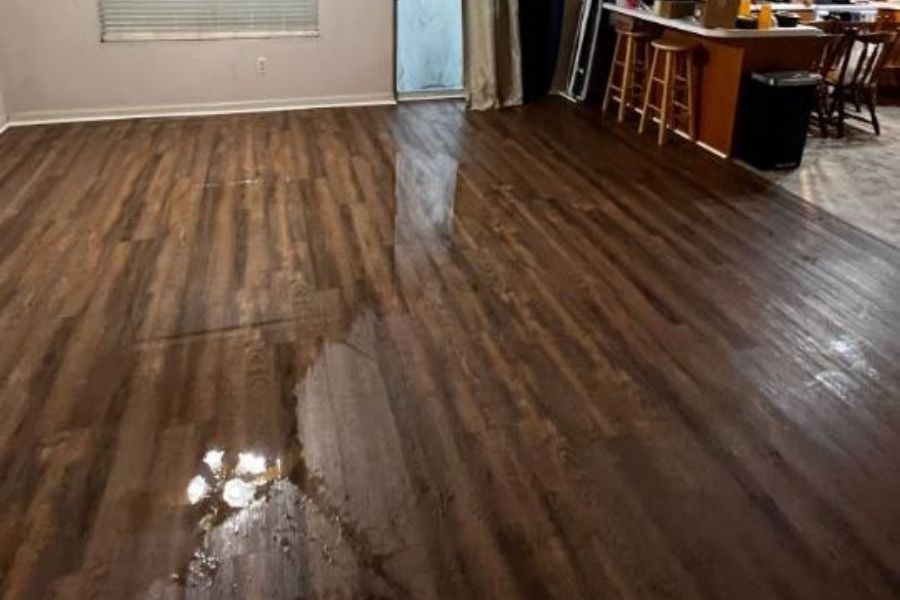
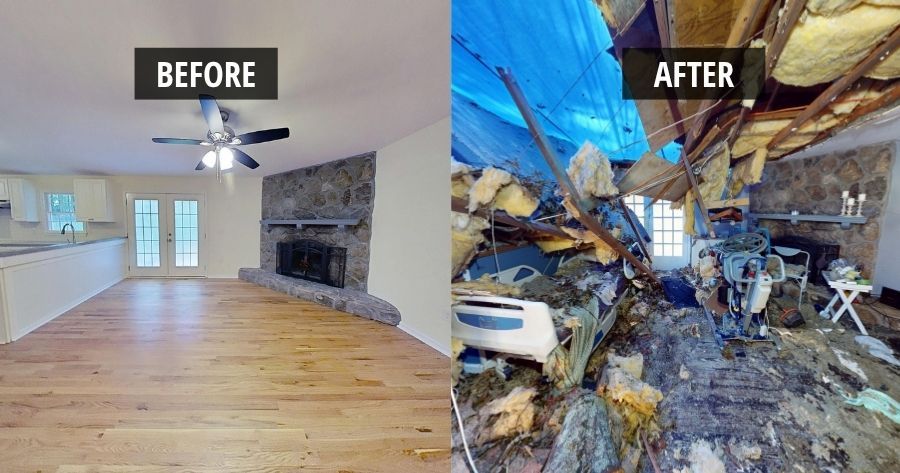
Thorough photo documentation of every affected area gives your adjuster a clear picture of the damage scope.
How Do You File a Water Damage Insurance Claim in Georgia?
Filing the claim is straightforward once your documentation is ready. Most Georgia insurers accept claims by phone, online, or through a mobile app. Here's how to move through the process.
Step 1: Report the Damage Promptly
Call your insurance company as soon as you've secured the property and started documenting. Most policies require "prompt notice" of a loss. Georgia doesn't set a specific hour requirement by law, but reporting within 24 to 48 hours is a solid rule of thumb.
Step 2: Request Your Claim Number
Your insurer will assign a claim number once you report the loss. Write it down and use it on every piece of correspondence going forward.
Step 3: Meet With the Adjuster
Your insurance company sends an adjuster to inspect the property, usually within a few days. Before they arrive, organize your documentation: photos ready to share, written inventory printed, receipts in one folder. Walk the adjuster through the damage and point out things they might miss, like moisture behind walls or water stains on subfloor materials.
Step 4: Get a Professional Estimate
An independent estimate from an IICRC-certified flood damage restoration company strengthens your position significantly. The adjuster works for the insurance company. A restoration professional's estimate provides a second opinion grounded in industry standards, not cost containment. Many Georgia homeowners don't realize they're allowed to get their own estimates, and doing so often results in a more complete scope of work being approved.
What Mistakes Should You Avoid When Documenting Water Damage?
Even organized homeowners make mistakes that weaken their claims. After working on hundreds of water damage projects across the Atlanta metro area, here are the documentation errors we see most often.
⚠ Top 5 Documentation Mistakes
- Cleaning up before documenting. We get it, the urge to mop is real. But if you remove damaged materials before photographing them, you've eliminated your evidence.
- Only taking wide shots. Panoramic photos show scope, but adjusters need close-ups. Warped baseboards and swollen door frames add up in payout calculations.
- Throwing away damaged items too early. Your insurer may want to inspect certain items before approving replacement costs. Keep them until your adjuster says otherwise.
- Missing hidden damage. Water travels. A leak upstairs can damage walls, ceilings, and floors below. Surface-only documentation means missed reimbursement.
- Not keeping a timeline. Insurers want to know when the damage started, when you discovered it, and what steps you took. A written log with dates strengthens credibility.
How Can a Restoration Company Help With Your Insurance Claim?
A qualified restoration company does more than dry out your home. They can be your strongest ally during the claims process. At The Homestar Group, our IICRC-certified technicians document damage using moisture meters, thermal imaging, and industry-standard reporting that insurance adjusters recognize and respect.
We work directly with insurance companies throughout the claim, handling technical communication and providing supplemental documentation when adjusters request it. We advocate for the full scope of repairs your home actually needs. You shouldn't have to become an insurance expert during one of the most stressful experiences of your life.
The EPA's guide on mold and moisture confirms that mold can start growing on wet surfaces within 24 to 48 hours. A restoration team that arrives quickly and documents moisture levels at the time of arrival creates a record supporting both health concerns and your claim for professional mold remediation.
For homeowners across Atlanta, Conyers, Marietta, Decatur, and surrounding communities, having a local team that knows Georgia building codes and regional insurance carriers is a real advantage. We've handled restoration insurance claims with most major carriers operating in metro Atlanta, so we understand what each one expects.
Water Damage? Let Us Handle the Insurance Paperwork.
The Homestar Group offers 24/7 emergency response and works directly with your insurance company. Free estimates within 24 hours.
Contact Our TeamRelated Resources
Want to learn more about protecting your home and navigating the restoration process? Check out these guides:
- Does Homeowners Insurance Cover Water Damage?
- The Water Damage Restoration Process Explained
- Top 5 Mistakes Atlanta Homeowners Make With Water Damage
Frequently Asked Questions
How soon after water damage should I file an insurance claim in Georgia?
File within 24 to 48 hours of discovering the damage. Georgia doesn't set a specific legal deadline, but most policies require "prompt notice." Waiting too long can give your insurer a reason to question the timeline or reduce your payout.
Can I start cleaning up water damage before the adjuster visits?
Yes. Georgia homeowners are expected to prevent further damage, which means removing standing water and starting the drying process. The key is documenting everything with photos and video before you move or remove anything.
What if my insurance company's payout estimate seems too low?
You have the right to dispute it. Provide your own photos, repair estimates from a licensed restoration company, and your detailed inventory. If the gap is significant, you can request a re-inspection or hire a public adjuster for an independent evaluation.
Does my Georgia homeowners policy cover mold that grew after water damage?
It depends on your policy. If mold developed because of a covered event like a burst pipe and you took prompt action to mitigate, many Georgia policies cover remediation up to your limits. Mold from long-term neglect or slow leaks is usually excluded.

Jeremy York is the owner of The Homestar Group, bringing over 15 years of experience in the water and fire damage restoration industry to homeowners and businesses throughout the Atlanta metro area. Under his leadership, The Homestar Group has built a reputation for reliable 24/7 emergency response and professional restoration services backed by IICRC certification. Jeremy is committed to serving the local community and takes pride in helping families and business owners recover from unexpected disasters. His hands-on approach ensures every customer receives the care and attention they deserve during challenging times.