Smoke vs Soot Damage - Understanding the Difference
Smoke and soot are two different problems: smoke is the gas and fine particles a fire sends through your home, while soot is the black, oily residue that settles on surfaces after the smoke cools. Our IICRC certified team at The Homestar Group handles smoke damage restoration across the Atlanta area, and we treat each one differently.
Why does that matter? Wipe soot with a damp rag and you'll smear it deeper into the paint, turning a small gray spot into a big gray streak. Plenty of homeowners learn this the hard way.
What's the Difference Between Smoke Damage and Soot Damage?
Smoke damage is mostly about odor and staining that soaks into porous materials, while soot damage is a physical coating that sits on surfaces and can corrode them over time. Smoke travels anywhere air can go, even into closets and attics. Soot usually lands closer to the fire, though it can ride air currents to far corners too.
Think of a backyard fire pit. The smoke is what gets into your hoodie. The soot is the black gunk on the end of your marshmallow stick. Same fire, totally different cleanup.
| At a Glance | Smoke Damage | Soot Damage |
|---|---|---|
| What it is | Gas and tiny airborne particles | Carbon residue that settles out of smoke |
| What you notice | Burnt smell, yellow or brown stains | Black or gray film and smudges |
| Where it hides | Carpet, drywall, insulation, ductwork, fabric | Ceilings, walls, fixtures, vents, countertops |
| Biggest risk | Odor that comes back on humid days | Acidic residue that etches metal, glass, and grout |
| How pros treat it | Deodorizing, fogging, sealing | HEPA vacuuming, dry sponging, careful wet cleaning |
Most fires leave behind a mix of both, so we test surfaces before choosing a method. Our process follows the IICRC S700 standard for fire and smoke restoration, which lays out how trained pros should handle fire residue.
We'll walk through your home, check the residue, and give you a free estimate within 24 hours.
See Our Fire Damage Restoration ServicesHow Does Smoke Damage Show Up in Your Home?
Smoke damage usually shows up as a stubborn burnt smell, yellow or brown discoloration, and a hazy film on walls and windows. Because smoke is a gas, it pushes into tiny gaps and soaks into anything porous. That's why rooms the fire never touched can still smell like a campfire weeks later.
Why Does Smoke Odor Keep Coming Back?
Smoke odor clings to carpet padding, drywall, and insulation, and air fresheners only cover it up. Then a muggy Atlanta afternoon rolls around and your living room smells like the fire all over again.
Getting rid of it for good takes professional fire odor removal. We remove what can't be saved, clean what can, then treat the air with tools like thermal fogging.
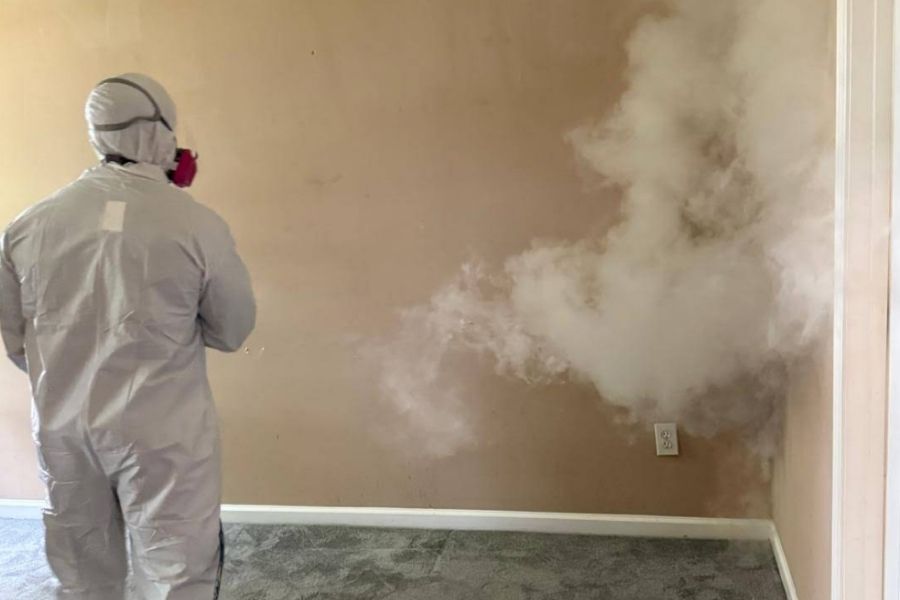
Fogging pushes deodorizer into the same cracks the smoke reached, so odor gets neutralized, not masked.
Why Is Soot Damage So Hard to Clean?
Soot is hard to clean because it's oily, it smears easily, and it's often acidic enough to discolor or etch surfaces if it sits too long. Metal fixtures can tarnish, grout can stain, and glass can turn cloudy. The longer soot stays put, the more likely a cleaning job becomes a replacement job.
Fine soot particles can also irritate your eyes, throat, and lungs. The EPA's indoor air quality guidance explains how particles like these affect the air you breathe at home.
Soot also changes depending on what burned and how hot the fire got.
1. Dry Smoke Residue
Fast, hot fires burning paper or wood leave this powdery residue behind, and while it vacuums up easier than most, it loves hiding in cracks.
2. Wet Smoke Residue
Slow, smoldering fires burning plastic or rubber create this one. Sticky, smeary, and sharp smelling.
3. Protein Residue
Left behind when food burns on the stove. It's nearly invisible, but it yellows paint and the smell is relentless.
4. Fuel Oil Soot
Caused by a furnace puffback, it's thick, black, and greasy enough to coat a whole room fast.
Protein residue fools people because the kitchen looks fine at first glance. After a cooking fire, our guide to emergency response after kitchen fires covers the first steps.
Bigger soot jobs need more muscle. We set up containment to keep particles out of clean rooms, then run HEPA air scrubbers that pull fine soot out of the air while we work.
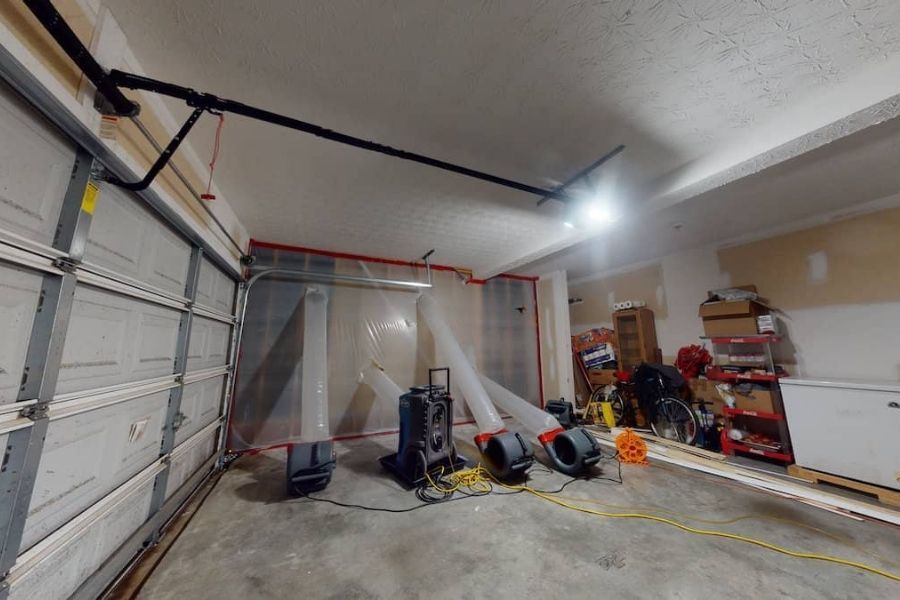
Containment and air scrubbing keep soot from drifting into clean rooms during cleanup.
What Should You Do (and Avoid) After a Fire?
After a fire, the best thing you can do is limit how far smoke and soot spread until a pro can assess the damage. That means leaving soot alone, keeping air from moving it around, and documenting everything for your insurance company. A few small choices early on can save a lot of cleanup later.
Smart Moves
- Wait for the fire department to clear your home.
- Take photos and video of every room before anything gets moved, since your insurance adjuster will want to see it all.
- Cover clean furniture and floors.
- Toss food, medicine, and cosmetics that sat near heat or smoke.
Please Don't
- Wipe soot with a wet cloth.
- Run the HVAC system or ceiling fans, which push soot into rooms the fire never reached.
- Turn on electronics that sat in the smoke.
- Toss smoky clothes in the washer before the soot is removed.
Want the bigger picture? Our breakdown of the fire damage cleanup process for Atlanta homeowners walks through smoke removal, soot cleaning, and what to expect along the way.
Who Can Help With Smoke and Soot Damage in Atlanta?
The Homestar Group has helped Atlanta area families recover from fire, smoke, and soot damage since 2010. Our team is IICRC certified, licensed, and insured, and we're available 24/7. We also work directly with your insurance company, which takes one big headache off your plate.
Smoke claims can get complicated fast. Our guide to the fire damage insurance claims process is worth a read before you talk to your adjuster.
We're based in Rockdale County and serve the whole metro, from restoration services in Conyers to Marietta, Decatur, and Stone Mountain. Call us day or night at (678) 928-5377. Every job is backed by our satisfaction guarantee.
Smoke and Soot Damage FAQs
Does homeowners insurance cover smoke and soot damage?
Often, yes. Many homeowners policies cover smoke and soot damage when it comes from a covered fire, but every policy is different. We work with insurers directly and can help you document what's needed.
Can you get soot damage without a house fire?
Yes. Furnace puffbacks, fireplace backdrafts, and candles burning for hours can all leave soot behind. Candle soot often shows up as dark lines along carpet edges and walls.
How long does smoke and soot cleanup take?
It depends on how far the residue spread and what burned. Light residue in a room or two moves much faster than a whole house job with repairs. We'll give you a realistic timeline after our first walkthrough.

Jeremy York is the owner of The Homestar Group, bringing over 15 years of experience in the water and fire damage restoration industry to homeowners and businesses throughout the Atlanta metro area. Under his leadership, The Homestar Group has built a reputation for reliable 24/7 emergency response and professional restoration services backed by IICRC certification. Jeremy is committed to serving the local community and takes pride in helping families and business owners recover from unexpected disasters. His hands-on approach ensures every customer receives the care and attention they deserve during challenging times.